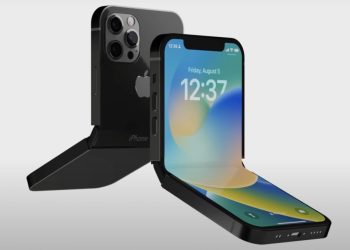

A recent durability test has put Samsung’s upcoming TriFold through its paces, revealing how the novel foldable design handles real-world stress and repeated use. Unlike traditional phones that fold once, the TriFold concept bends in multiple places, and that complexity raises natural questions about how well the hinges and screen hold up over time. The test subjected the device to repeated folding cycles, pressure on various hinges, and standard drops to see whether its multi-axis mechanism could survive the wear and tear of everyday life.
Early impressions from the test show that Samsung’s engineering holds up better than many expected. The primary challenge for any multi-fold device is stress accumulation at the bending points, where repeated movement can cause creases, weakening, or hinge failure. In this case, the TriFold remained operational after thousands of open-and-close cycles, and the screen showed minimal distortion at the folding lines. While no test can perfectly simulate years of real use, the results suggest Samsung has invested significant effort into reinforcing the moving parts and minimizing long-term degradation.
Another focus was how the device handles external pressure and accidental drops. Testers pressed on the outer and inner surfaces around the hinges to see if any give or flex would indicate potential break points. The TriFold resisted deformation under moderate force, and though extreme pressure did eventually affect the structure, it performed in line with or better than many existing foldable phones. Drop tests from typical pocket and table heights resulted in scuffs and cosmetic marks, but the core folding functionality was preserved, indicating that the complex hinge system isn’t overly fragile.
Despite these promising outcomes, durability testers emphasized that no foldable device is invincible. The more moving parts a phone has, the more opportunities there are for wear or failure over long periods. Dust, lint, and moisture remain persistent threats to hinges and folding screens, and consumers should still handle any multi-hinge phone with care. Protective cases and mindful use patterns will remain important for extending the life of these advanced designs.
The broader takeaway from the durability test is that Samsung’s TriFold may be closer to mainstream readiness than some skeptics assumed. By surviving intense mechanical stress and typical physical impacts, the prototype demonstrates that multi-fold phones can be engineered to withstand everyday life without appearing overly delicate. Whether the final retail version maintains this level of strength will depend on materials choices and further refinement before launch.
As foldables continue to evolve, tests like this help set expectations for what users can realistically expect from futuristic form factors. The TriFold’s performance offers encouragement for those curious about multi-fold devices, showing that innovation in flexibility doesn’t have to come at the expense of resilience. For consumers weighing durability against novel design, these tests suggest that foldable phones are gradually shedding their reputation for fragility.