

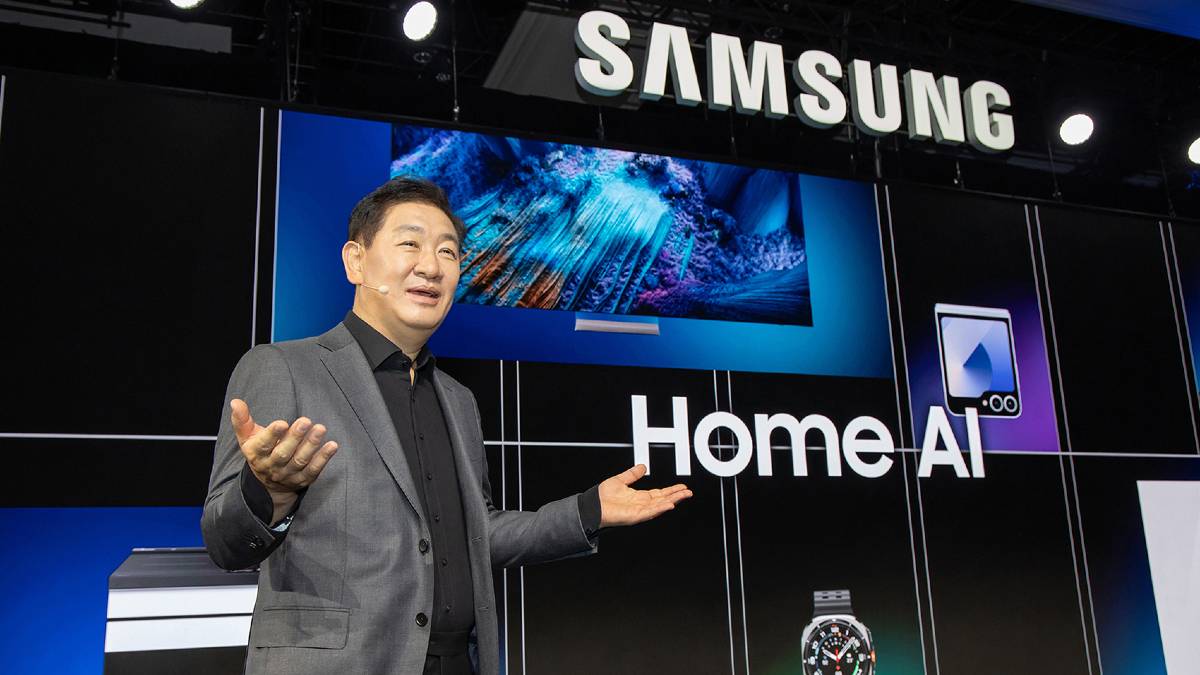

Samsung arrived at CES 2026 with a clear message: artificial intelligence is no longer a standalone feature, but the foundation of its entire consumer ecosystem. Across TVs, home appliances, mobile devices, and displays, the company outlined how AI will quietly run in the background to make everyday technology more adaptive, efficient, and connected.
In home entertainment, Samsung doubled down on AI-powered TVs that can automatically adjust picture quality, sound profiles, and energy usage based on what’s on screen and how the room is being used. The latest Neo QLED and OLED models use real-time analysis to upscale content more accurately, balance brightness for different lighting conditions, and improve dialogue clarity without manual tuning. Samsung also emphasized tighter integration between TVs and other smart home devices, turning the television into a central control hub rather than just a screen.
Home appliances were another major focus, with Samsung showcasing a more intelligent SmartThings ecosystem. Refrigerators, washing machines, air conditioners, and ovens are being upgraded with predictive AI that learns usage patterns over time. These appliances can suggest energy-saving modes, adjust performance automatically, and even notify users before maintenance issues become serious. Samsung’s goal is to reduce friction in daily routines while lowering long-term energy consumption.
AI also played a central role in Samsung’s vision for connected living. Devices are designed to communicate with one another more fluidly, sharing contextual data to make smarter decisions as a group. For example, a TV can coordinate with lighting and climate systems for a more immersive viewing experience, while kitchen appliances can sync with mobile devices to suggest meal planning or grocery reminders.
On the display and computing side, Samsung highlighted advancements in panels aimed at professionals, gamers, and creators. Higher refresh rates, improved color accuracy, and more power-efficient displays were presented as part of a broader strategy to support next-generation workflows. AI is increasingly being used to optimize performance without requiring users to manage complex settings themselves.
Rather than focusing on a single headline-grabbing product, Samsung’s CES 2026 presence was about cohesion. The company is positioning itself as a provider of an AI-driven lifestyle, where devices feel less like isolated gadgets and more like parts of a responsive environment. The emphasis was not on flashy concepts, but on practical changes that gradually reshape how people interact with technology at home.
Samsung’s approach suggests that the next phase of consumer tech won’t be defined by dramatic hardware changes, but by software intelligence that quietly improves how devices work together. CES 2026 marked another step toward that future, where technology adapts to users instead of the other way around.