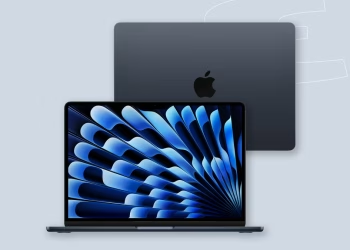

Intel could be making a quiet comeback to Apple’s laptop business — but not in the way many longtime Mac fans might expect. According to recent industry leaks, Intel is being considered to produce Apple-designed chips rather than to supply its own Intel-architecture processors. In short: Apple would still design the chip architecture (the “M-series”), while Intel would act as a foundry — manufacturing those chips for Apple under contract.
This potential arrangement centers around Intel’s latest advanced fabrication processes. Apple reportedly wants to use Intel’s “18AP” process node to produce entry-level versions of its M-series chips. Under the plan, Intel wouldn’t design the hardware logic — Apple keeps that — but would handle the complex silicon manufacturing. Initial samples might arrive after Apple receives Intel’s design kit, with possible volume shipments and integration into devices projected for mid-2027.
If this deal goes through, it wouldn’t mark a return to Intel-based Macs (no x86 CPUs powering macOS again). Instead, it would be a behind-the-scenes collaboration: Apple’s ARM-based architecture remains, but Intel becomes part of the chip supply chain. For Apple, that could mean greater supply-chain flexibility and diversification of manufacturing partners. For Intel, it could be a major win: after years of seeing Apple push its own chips made elsewhere, returning as a foundry partner could signal renewed relevance and a strategic rebound.
For end users, the shift would likely be transparent: Macs would still run Apple-designed silicon — but those silicon chips might soon carry the “Made by Intel” stamp. Performance, architecture, and user experience would remain under Apple’s control. The change would mostly impact where and how the chips are made, not what’s inside them.
Whether the deal fully materializes depends on technical, logistical, and business-level negotiations — but if it does, we might see Intel once again linked to Apple laptops in a new way, starting around 2027.