
During the late 1990s, Formula 1 was a hotbed of experimentation, where rapid advances in electronics and loosely interpreted regulations allowed teams to push innovation to its limits. Out of this environment came one of the sport’s most intriguing yet short-lived technical tricks: McLaren’s infamous extra brake pedal, later nicknamed the “fiddle brake.”
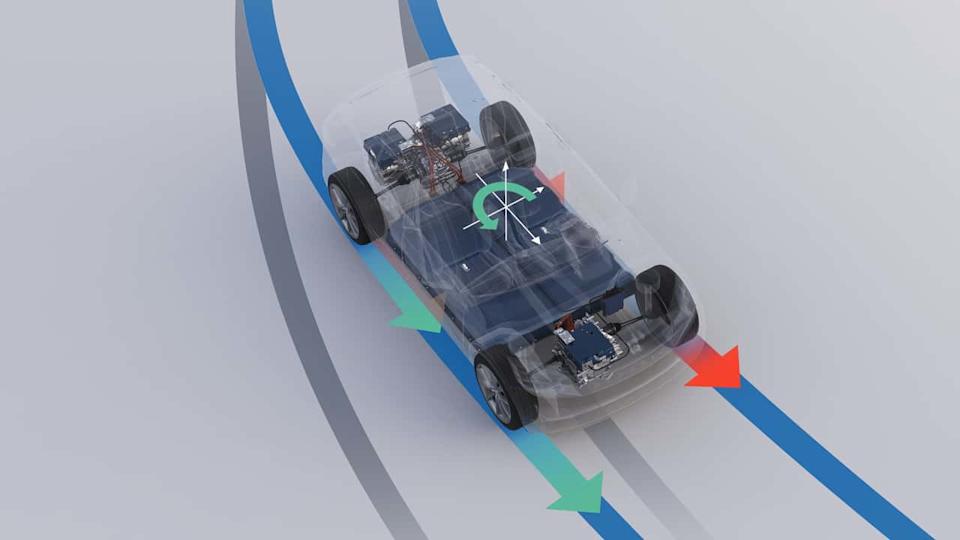
At first glance, the idea was surprisingly simple. Alongside the standard brake and throttle pedals, McLaren added a third pedal that allowed the driver to brake a single rear wheel independently. By slowing either the left or right rear wheel during corner entry, drivers like Mika Häkkinen could induce yaw and rotate the car more aggressively into turns, dramatically reducing understeer and sharpening cornering response.
Although it was technically just braking, the system functioned as a rudimentary form of torque vectoring long before the concept became mainstream. By selectively slowing one wheel, the car could be rotated more efficiently while still being set up with a stable, less oversteer-prone baseline. This gave McLaren a significant performance advantage, allowing the drivers to manually fine-tune the car’s balance mid-corner using nothing more than their feet and driving skill.
Used during the 1997 and 1998 seasons, the system proved immediately effective. Early testing reportedly showed gains of up to half a second per lap, a massive improvement in Formula 1 terms. This advantage played a key role in McLaren’s dominant 1998 championship campaign, despite some drivers—most notably David Coulthard—finding the setup less intuitive than Häkkinen.
Crucially, the system was entirely mechanical and driver-operated. It had no automation and no connection to the steering system, which McLaren believed kept it within the letter of the regulations. Initially configured for one braking side per circuit, the setup was later refined with a cockpit switch that allowed drivers to choose which rear wheel to brake depending on the corner, making it especially powerful in slower sections of the track.
However, the innovation didn’t go unnoticed. Photographs revealing a single rear brake glowing under load raised suspicions among rivals and journalists alike. Once the system became public knowledge, competing teams protested, arguing that it violated the spirit of the rules. Formula 1 officials ultimately classified the extra pedal as a form of four-wheel steering, banning it outright before the concept could be further developed. Ironically, rival teams also claimed that copying the system would be prohibitively expensive, despite McLaren engineers later stating it cost as little as £50 to implement.
While the fiddle brake vanished from Formula 1 almost overnight, the idea itself refused to disappear. McLaren had effectively demonstrated the immense benefits of controlling a car’s rotation by managing individual wheel forces. In the years that followed, the same principle resurfaced in road cars as computer-controlled, brake-based torque vectoring systems integrated into stability and traction control.
Today, this technology is used widely across the automotive industry. Hot hatches rely on it to feel agile and playful, while large sedans and SUVs use it to mask their weight and improve cornering stability. The concept later evolved into active torque-vectoring differentials, which distribute power side-to-side rather than relying on braking, but the underlying philosophy remains unchanged.
What began as a clever workaround in Formula 1 ultimately helped shape a core technology found in modern performance and safety systems. McLaren’s extra pedal stands as a perfect example of how ideas born in motorsport, even when banned, can migrate, mature, and quietly become part of everyday driving.